Backface deformation (BFD) is one of the key criteria used to assess soft and hard body armor. It measures the depth of the indentation left in the backing material after a non-penetrating projectile impact. The following overview summarizes the principal requirements used in several national standards.
United States
NIJ Standard 0101.06
NIJ 0101.06 was issued in 2008 and was superseded by NIJ 0101.07 in 2021. It remains one of the best-known body-armor standards worldwide. Under NIJ 0101.06, the maximum permitted backface deformation is 44 mm.
- Level IIA: 9 mm FMJ round-nose and .40 S&W FMJ projectiles.
- Level II: 9 mm FMJ round-nose and .357 Magnum JSP projectiles.
- Level IIIA: .357 SIG FMJ flat-nose and .44 Magnum SJHP projectiles.
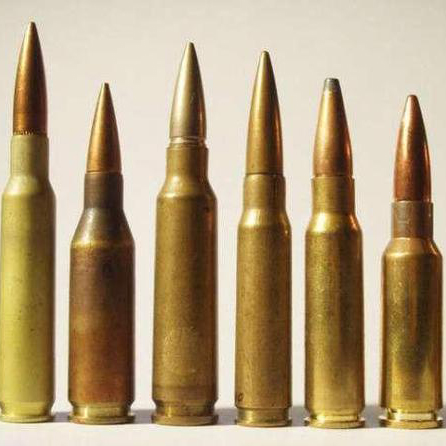
- Level III: 7.62 x 51 mm M80 FMJ rifle projectile.
- Level IV: .30-06 M2 AP armor-piercing projectile.
NIJ Standard 0106.01 for Helmets
NIJ 0106.01 was issued in 1981 and was later supplemented with Level IIIA requirements. It classifies helmets according to the following representative threats:
- Level I: .22 LR high-velocity lead and .38 Special round-nose lead projectiles.
- Level IIA: 9 mm FMJ round-nose and .357 Magnum JSP projectiles fired from a 4 to 4.75 inch barrel.
- Level II: The same projectile families fired from a 6 to 6.75 inch barrel.
- Level IIIA: .357 SIG FMJ flat-nose and .44 Magnum SJHP projectiles.
China
China's GA 141-2010 standard replaced GA 141-2001 and took effect on October 17, 2010. Its permitted backface deformation is substantially stricter than the traditional NIJ limit, with a maximum of 25 mm.
- Level 1: 7.62 x 17 mm lead-core pistol projectile.
- Level 2: 7.62 x 25 mm lead-core pistol projectile.
- Level 3: 7.62 x 25 mm lead-core projectile fired from a long-barreled Type 79 submachine gun.
- Level 4: 7.62 x 25 mm steel-core projectile fired from a Type 79 submachine gun.
- Level 5: 7.62 x 39 mm Type 56 ball projectile.
- Level 6: 7.62 x 54 mm Type 53 ball projectile.
Russia
Russia's GOST R 50744-95 classification was revised in 2017. It permits a maximum backface deformation of 16 mm, making it one of the strictest limits in this comparison.
- BR1: 9 x 18 mm Makarov 57-N-181S.
- BR2: 9 x 21 mm Gyurza 7N28 lead-core projectile.
- BR3: 9 x 19 mm Parabellum 7N21 hard steel-core projectile.
- BR4: 5.45 x 39 mm 7N10 enhanced-penetration and 7.62 x 39 mm 57-N-231 hard steel-core projectiles.
- BR5: 7.62 x 54R 7N13 and 7-BZ-3/B32 armor-piercing incendiary projectiles.
- BR6: 12.7 x 108 mm 57-BZ-542 armor-piercing incendiary projectile.
United Kingdom
The 2017 HOSDB standard uses both average and maximum backface deformation limits. The principal categories include:
- HO1: 9 x 19 mm FMJ and JHP; maximum BFD 44 mm.
- HO2: Higher-velocity 9 x 19 mm FMJ and JHP; average BFD 25 mm and maximum 44 mm.
- HO3: 7.62 x 51 mm NATO and 7.62 x 39 mm; average BFD 25 mm and maximum 30 mm.
- HO4: Sako .308 Winchester 480A or Barnes .308 TSX BT; average BFD 25 mm and maximum 30 mm.
- SG1: 12-gauge shotgun; average BFD 25 mm and maximum 30 mm.
- Optional threats: .357 Magnum flat soft point with a maximum BFD of 44 mm; 5.56 x 45 mm SS109 and 5.56 x 45 mm LE223T3 with an average BFD of 25 mm and maximum 30 mm.
Germany
Germany's 2008 Technische Richtlinie (TR) is based on the VPAM framework and includes armor-piercing handgun threats. The maximum permitted backface deformation is 42 mm.
- SK L: 9 x 19 mm DM41 round-nose lead-core FMJ.
- SK1: The SK L threat plus QD-PEP II/S and Action 4 projectiles.
- SK2: .357 Magnum FMS.
- SK3: 5.56 x 45 mm SS109 and 7.62 x 51 mm DM111 steel-core projectiles.
- SK4: 7.62 x 51 mm P80 armor-piercing projectile.
Netherlands
The Dutch ISO 14876-2 standard permits a maximum backface deformation of 44 mm.
- Level 1: 9 x 19 mm FMSJ.
- Level 2: Higher-velocity 9 x 19 mm FMSJ.
- Level 3: High-velocity 9 x 19 mm FMSJ and .357 Magnum FMJ.
- Level 4: 5.56 x 45 mm M193 and 7.62 x 51 mm NATO 9.3 g projectiles.
- Level 5: 7.62 x 51 mm 9.7 g hard steel-core armor-piercing projectile.
- Level S: 12-gauge slug.
Summary
Backface deformation limits differ significantly among national standards. A protection level should therefore never be evaluated by its name alone. Projectile construction, velocity, shot placement, conditioning and the permitted deformation must all be reviewed together when selecting protective equipment for a specific operational requirement.